
Christmas Reading Reflections: A Review of Buy. Run. Build. and the CEOs Who Shape How You See Businesses
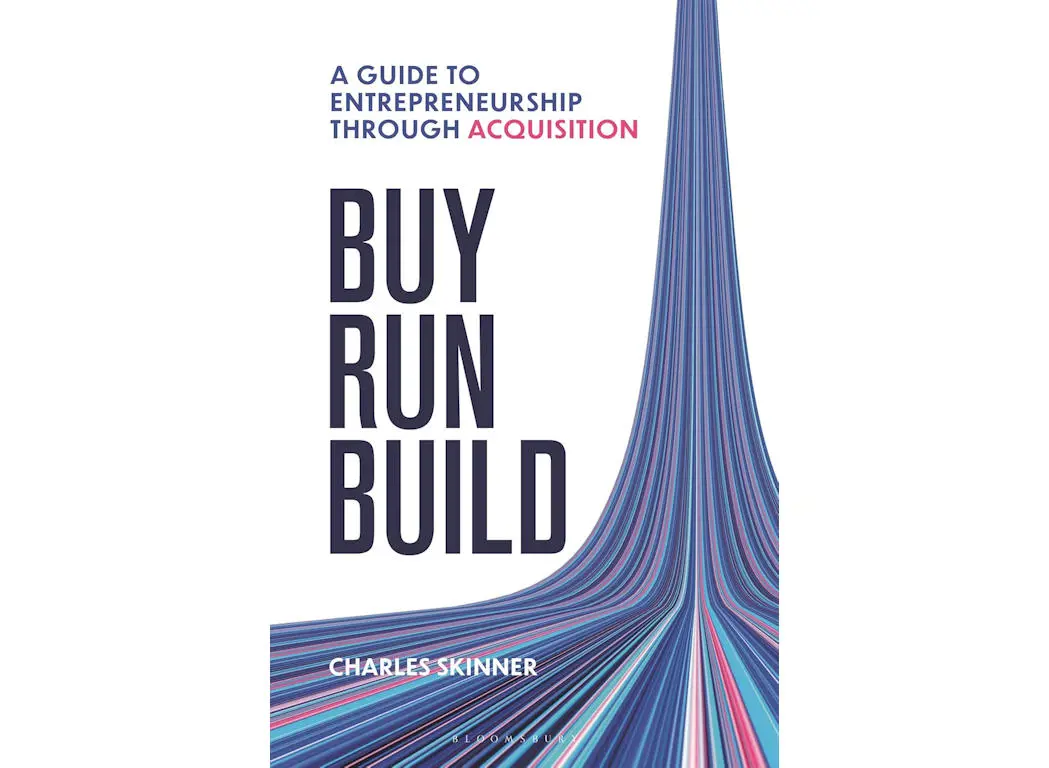
Christmas often creates a rare pause — time to reflect on the year just gone, lessons learned, and the people who have quietly shaped how you think about business. One of my Christmas reads this year was Buy Run Build by Charles Skinner. Special thanks to Nick Searle, who highlighted it on his excellent podcast A Different Perspective. In a world obsessed with hype, speed and shortcuts, Buy Run Build feels almost radical in its restraint. it reinforced something I’ve long believed: having access to thoughtful, experienced CEOs — even briefly — materially changes how you analyse companies.
Buy Run Build, subtitled A Guide to Entrepreneurship Through Acquisition, is one of those books that doesn’t need to shout. It doesn’t promise shortcuts or lean into hype. Instead, it offers something far more useful: a clear-eyed, experience-led view of what it actually takes to buy a business, run it responsibly, and then build something of lasting value.
At its core is a simple but still under-appreciated idea — you don’t have to found a business to be an entrepreneur. You can acquire one, operate it well, and grow it intelligently. That framing alone cuts through much of the start-up mythology and Silicon Valley noise.
For me, the book also has a personal connection. I first came across Charles back in 2004 when I was a support services analyst covering Brandon Hire. At that stage of my career, I was fortunate to have access to senior leaders like him while analysing businesses, listening to how they thought about risk, people, capital, and trade-offs. You don’t need to work directly with someone to learn a considerable amount from how they see the world.
Reading Buy Run Build years later feels less like discovering new ideas and more like seeing those ways of thinking clearly articulated.
Buy: judgment before ambition.
The early chapters dismantle the romance of “doing a deal”. Charles is clear: buying a business is not about clever leverage or financial engineering; it’s about judgement. What sort of business genuinely suits you? What risks are you actually equipped to manage? And just as importantly, what are you prepared to walk away from?
The funding chapters are remarkably grounded. Banks, private equity, angels, friends and family are not presented as abstract pools of capital, but as stakeholders with incentives, constraints and expectations. This isn’t theory — it’s written by someone who understands how capital behaves when things go well, and how it behaves when they don’t.
One of the most valuable takeaways is that not having money isn’t necessarily the end of the road. Credibility, structure and creativity can often bridge gaps that spreadsheets alone cannot — a lesson many aspiring acquirers would benefit from learning early.
Run: the reality of leadership.
If buying a business is hard, running one is harder — and Buy Run Build doesn’t soften that truth. The chapters on being CEO are honest about power, responsibility and isolation. Tone matters. Narrative matters. And the uncomfortable idea that “the customer isn’t always right” will resonate with anyone who has had to balance short-term appeasement against long-term health.
The section on boards is powerful. Good chairs, bad chairs, effective meetings, and the true meaning of “non-executive” are explained clearly and through lived experience. Anyone who has sat through a board meeting that achieved very little will instantly recognise these pages.
People management is treated with the same realism. Paying people properly, incentivising them sensibly, and knowing when someone has to leave are framed not as HR processes, but as moral and commercial decisions. Charles writes with humanity, but without sentimentality — understanding that being “nice” and being “kind” are not the same thing.
Build: scale, capital and resilience.
The final third of the book focuses on growth and capital. Banks, debt, private equity and public markets are demystified, with particular insight into how CEOs should think about their relationship with capital providers.
What stands out is the refusal to glamorise growth. Scale introduces both fragility and opportunity. Capital amplifies mistakes just as efficiently as it amplifies success. The chapters on failure — reputational damage, loss of confidence, and the inevitable question of “what happens next?” — are among the strongest in the book.
The closing reflections are quietly profound—behaviour matters. How you conduct yourself under pressure is remembered long after the numbers are forgotten. And perhaps the most important reminder of all: fortunes turn. If you stay in the game long enough, you will be back on top again — and you should make sure you enjoy it when you are.
Why this book still matters
It’s a reminder—particularly at this time of year—of how valuable experienced operators are when analysing businesses. Listening to how they think, how they frame risk, and how they behave when things don’t go to plan is often far more instructive than any spreadsheet.
This is not a book about being the loudest person in the room. It’s about being thoughtful, resilient and decent — and still building something that lasts.
Have a great week!