
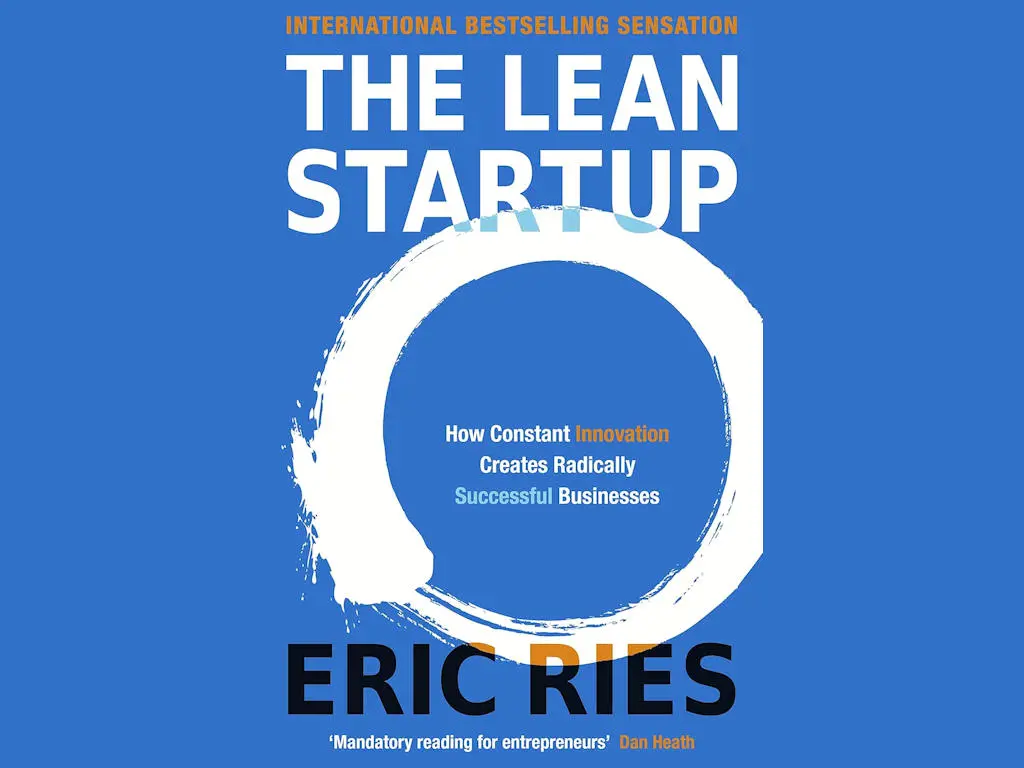
The Lean Startup Was Built for a Zero-Rate World. The Next Generation of Winners Will Need Something Harder.
Over the weekend, I picked up The Lean Startup again.
For over a decade, it was almost required reading across the technology, venture capital, and startup ecosystems. The philosophy was elegant: move fast, ship early, test constantly, fail cheaply, iterate relentlessly.
And for a long period, it worked extraordinarily well.
But rereading it in 2026 feels different — not because the principles are wrong, but because the world around them has fundamentally changed.
The Lean Startup may ultimately become remembered as the defining startup playbook of the zero-rate era.
The Lean Startup Was Perfectly Designed For The Cheap Capital Era
The original lean startup model emerged during one of the most extraordinary economic periods in modern history.
Interest rates collapsed.
Capital became abundant.
Investors rewarded growth above profitability.
Technology costs fell dramatically.
In that environment, the logic made perfect sense.
Build quickly.
Raise frequently.
Acquire users aggressively.
Optimise later.
Prioritise market share over economics.
If funding remained available, survival itself became a strategy.
The result was an entire generation of companies optimised for velocity rather than durability.
Some became exceptional businesses.
Many became permanently dependent on external capital — running fast, burning hard, and calling it progress.
The Market Has Changed Faster Than Many Founders Realise
Today, the environment is materially harsher.
Higher interest rates have repriced risk. Investors scrutinise burn rates far more aggressively. Enterprise customers are slower to buy. Software budgets face an internal challenge they did not five years ago. Growth capital is more selective. Public SaaS multiples have structurally reset.
That changes the operating model required to win.
Because in this market, lean alone is no longer enough.
The winners now need to be:
- lean operationally
- disciplined financially
- ruthless on customer value
- genuinely capable of generating cash flow before the next raise becomes necessary
This is where many early-stage businesses are quietly struggling.
They learned how to iterate on products.
They haven't developed the practices to build resilient companies.
AI Will Accelerate Competition — Not Remove The Need For Discipline
One of the most persistent misconceptions in technology markets right now is that AI changes the laws of business economics.
It does not.
AI may dramatically lower barriers to entry and accelerate product development — but that intensifies competition rather than reduces it.
If building becomes easier, then execution, distribution, customer trust and operational reliability become the only remaining sources of durable advantage.
The automotive software market illustrates this clearly.
Over the past three years, capital flowed readily into mobility businesses on the strength of narrative alone — EV transformation, digital retail, connected vehicles, AI-enabled operations.
Some of that capital funded genuinely important businesses.
Much of it funded feature-rich products that could not demonstrate a measurable return to an operator under margin pressure.
Those businesses are not scaling. They are churning.
And no amount of product iteration fixes a commercial model built on hope rather than economics.
When multiple competitors can build similar functionality quickly, a sustainable advantage comes from:
- customer retention
- workflow integration
- data quality
- measurable ROI
- balance sheet strength
Technology alone rarely creates enduring businesses.
Operational execution does.
Automotive Is Becoming The Ultimate Stress Test
This shift is particularly visible across automotive technology — and it is more advanced than most people outside the sector appreciate.
Dealer groups today are managing simultaneous pressure across:
- margin compression
- higher financing costs
- weaker consumer confidence
- electrification complexity
- operational cost inflation
The buying environment has fundamentally changed as a result.
The question has shifted from:
“Is this innovative?”
to:
“Does this materially improve my economics?”
That is a very different conversation.
And businesses that cannot answer the second question with hard evidence — not demos, not case studies, not pilot programmes — are finding it increasingly difficult to sustain commercial traction, regardless of how compelling the product appears on paper.
Automotive has always eventually punished weak execution.
The difference now is that the timeline has compressed.
The Next Decade Will Reward Execution More Than Vision
One of the biggest misconceptions in venture markets is that ideas primarily drive great outcomes.
In reality, the hardest part is operational execution under sustained pressure — especially once easy funding disappears and the market stops giving credit for potential.
The businesses most likely to succeed over the next decade are unlikely to be those with the loudest narratives.
They will be the ones that:
- control cash carefully
- build genuine customer dependency
- compound retention
- improve unit economics quarter by quarter
- survive long enough to benefit from consolidation
Ironically, the next generation of winners may look less like Silicon Valley hyper-growth and more like highly disciplined industrial operators with software characteristics.
In automotive, that is not a consolation prize.
That is the only model that works.
The Most Important Shift: From Experimentation To Accountability
The core lesson I took from rereading The Lean Startup is not that the framework is obsolete.
It is that the framework is incomplete for the world we are now entering.
Experimentation still matters.
Speed still matters.
Customer feedback still matters.
But capital efficiency, resilience and operational discipline matter far more than they did when the book was first written — because the market is no longer rewarding companies simply for moving quickly.
It is rewarding to be a business that can endure.
The next generation of great businesses will not simply be the fastest builders.
They will be the companies capable of surviving long enough to compound.
In this market, survival is no longer defensive.
It is an offensive strategy.
Have a great week!